Sailing the Atlantic
Rally for Cruisers 2025
By Simon Ransome-Williams
Introduction
The Atlantic Rally for Cruisers (ARC) started in 1986, conceived by Jimmy Cornell to provide a fun, safe, and social way for cruising sailors to cross the Atlantic with the first fleet leaving Las Palmas for Barbados. Organized by the World Cruising Club, and celebrating its’ 40th anniversary, it has grown into the largest transatlantic rally, with its main route now ending in St. Lucia. As its’ popularity grew, and space ran short, a sister rally, the ARC+, was introduced sailing to Grenada via Sao Vincente in the Cape Verde Islands.
It was the ARC+ rally that I had signed up for, departing Las Palmas on Gran Canaria on the 9th November 2025. This was a long-time ambition for me and I had planned to do it in 2026 on leaving my profession as a Teacher at The Woodroffe School but circumstances allowed me to sign up a year early.
Arrival in Las Palmas.
In order to do the ARC, I had placed an advert on social media and the Ocean Crew Link Website. I had several responses in quick succession and opted to join a young couple from Switzerland and Columbia who had taken a sabbatical from work and bought a brand new Excess 11m catamaran, ‘Kasafari’. They had not been sailing long and seemed happy to have what they perceived as an older and wiser head on board in order to get to the Caribbean!
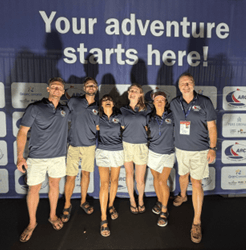
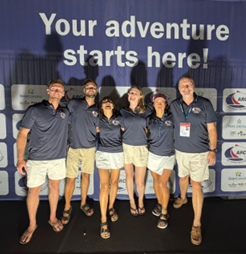
Landing in Las Palmas, it was a short bus ride to the marina and my first introduction to the crew. There were 6 of us in total. Robin (Swiss) and Carolina (Columbian), the owners. Then Ryan (American), Jen (Australian), Leilani (Filipino) and myself. A truly multinational crew!
The crew in Las Palmas
The week was filled with regular events (including the infamous costume party), courses and parties and it was not long before we got to know each other and the crews from other yachts well. Time was spent planning routes, preparing the yacht, victualling and completing safety checks.
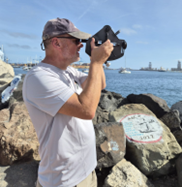
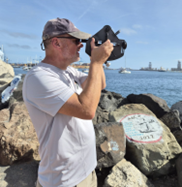
Learning to use my sextant
On Friday 10th November I attended the Skippers briefing with Robin and, after a good night’s sleep we crossed the start line on Saturday with over 100 other yachts.
Las Palmas to Cape Verde (900 nm).
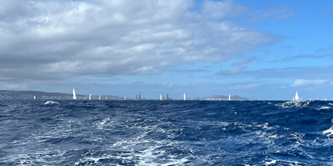
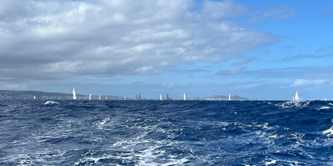
A windy start greeted us on the start line with winds around15 knots and from the North West. The predictions were that it would get windier as we left the lee of the island and by nightfall, we found ourselves broad reaching due south in 20- 25 knots of wind. We had started the race with full sail but reefed down for the night and made good progress for the next 3 days.
Leaving Gran Canaria
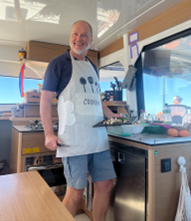
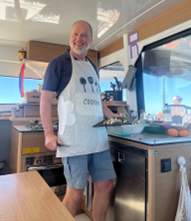
Settling in to the rhythm of watches can be challenging after life in the marina but we had all planned this together and it was not long before the daily routines were established. Cooking, cleaning, safety checks and maintenance were part of our duties and there was plenty of time to get to know each other well.
The master chef at work!
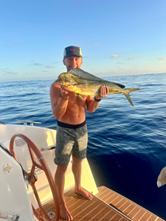
On the 4th day we hit a predicted lull. The wind quickly dropped to less than 5 knots and the decision was taken to motor. However, it did give us the opportunity to go swimming, fishing and, the greatest surprise of all, whale watching! We caught a large Mahi Mahi which was gutted, filleted and cooked for supper.
Dinner!
The wind stayed obstinately low for 2 days before slowly picking back up again. We had been warned about the funnelling effect as we approached the Cape Verde Islands, but whilst the wind got up to 25 knots, the seas died away, and so we found ourselves roaring across the finish line with one reef in the main at 9 knots boat speed! What a way to finish the first leg!
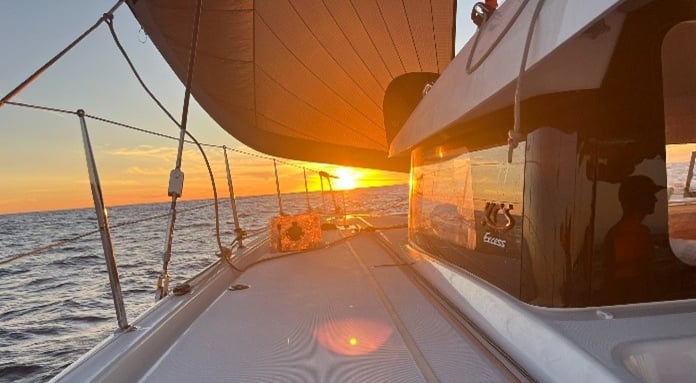
Sunset
Mindelo, Sao Vincente.
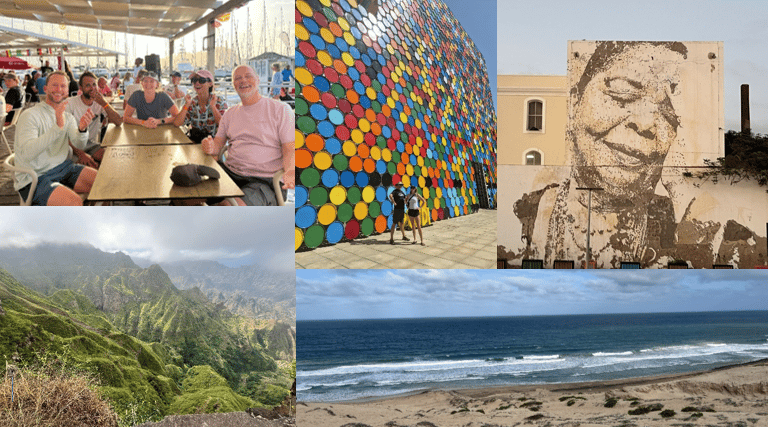
The ARC+ stop over is about 1 week to allow for all yachts time to arrive. Once again, there were tours and events organised by the World Cruising Club. Time was spent sorting out the yacht, including climbing the mast to check the rigging. However, I particularly enjoyed the island tour to nearby island Sao Antao where we were driven up to the spectacular summit through lush green sugar cane and banana plantations. We all also enjoyed sundowners in the Mindelo floating bar!
After another Skippers briefing, we set sail for the main event, the Atlantic crossing to Grenada.
Mindelo, Sao Vincente to St George, Grenada (2200 nm).
We were predicted another hole in the wind mid-atlantic and so we had already decided to sail south for a day before turning towards Grenada in order to avoid the motoring. In the end we did not turn on the motors at all. The first 5 days were very pleasant with typical trade winds and we flew the ‘parasailor’ (a cross between a cruising chute and a kite) almost continually.
Light trade winds
The first half of the trip we were told there may be squalls but they would be less vicious and less frequent than in the second half of the journey. As it turned out we had incredibly consistent wind of between 12 and 14 knots and the parasailer dragged us downwind at a steady 5.5 knots which, whilst not taxing on the crew, caused us frustration as we had hoped to be sailing faster.
As such, there was much experimenting with sailing angles, changing to the ‘code zero’, and different sail combinations in order to increase VMG but, whilst it was easily possible to sail faster, it was in the wrong direction and VMG suffered.
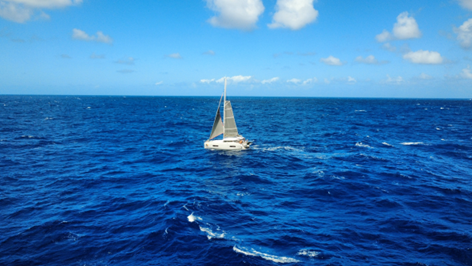
'Kasafari' mid-Atlantic
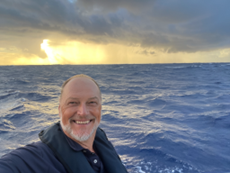
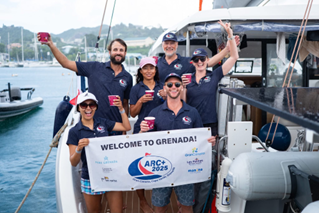
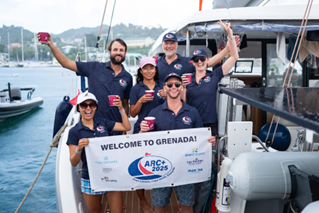
After one week we were still not half way across and the frustration was building but we need not have worried. Instead of dropping into a hole, we ended up being further north than we had originally intended and over the next 2 days watched as the wind steadily increased. We took down the parasailer, then some hours later, reefed the main, then reefed again as the wind never fell below about 18 knots and squalls would hit bringing heavy rain and gusts. The waves grew but so did our boat speed! We goose winged the boat and she loved it, running straight and catching surfs. What had looked like a Wednesday arrival shortened rapidly and we eventually crossed the finish line off Grenada at lunchtime on Sunday 17th December. The welcome as we entered the Port Louis marina was overwhelming. Other crews were cheering and horns sounded as we stepped ashore and were welcomed with rum punches by the WRC staff. We danced the night away with a huge sense of achievement and success.
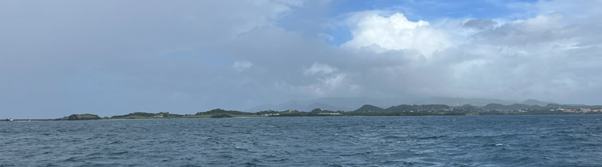
Land Ho!
Conclusions
It was interesting to sail with such a diverse crew but it did take time to learn each other’s strengths and weaknesses. Also, the yacht was effectively brand new and learning the boat’s capabilities and ironing out its’ shortcomings took time. In hind sight it would have been better to have sailed together and shaken out the yacht’s teething problems before attempting the crossing but this all added to the adventure and interest as we sailed.
Would I do it again? In a heartbeat! I sincerely hope to do it again, but next time I would like to do the rally to St. Lucia and, having now crossed the Atlantic on a trimaran and a catamaran, I would like to do it in a monohull. ARC 2027 anyone?
YACHT SURVEYS
Expert yacht surveying along the South Coasts of England and Wales.
Including; Falmouth, St Austell, Plymouth, Kingsbridge, Brixham, Torquay, Teignmouth, Exmouth, Topsham, Axmouth, Lyme Regis, West Bay, Weymouth, Poole, Lymington, Southampton, Portsmouth, Chichester, Brighton, Bristol, Gloucester, Newport, Cardiff and Swansea.
CONTACT
© 2026. All rights reserved.